

8 Best Miter Saws for Beginners and Pros in 2025

Disclosure: This post may contain affiliate links from online retailers, including Amazon. If you click a link and buy tools or supplies, I may earn a small commission—at no extra cost to you. This allows me to provide you free helpful content, and I genuinely appreciate your support🤝 Learn more
Ever try cutting a perfect angle by hand, only to end up with joints that don’t fit or trim that leaves ugly gaps staring you down? Trust me, I’ve been there—frustrated, double-checking my measurements, and wondering if the “best miter saw” was just marketing hype or something I actually needed.
I’ll never forget the first time I used a real miter saw. Suddenly, all those tricky cuts—crown molding, picture frames, even simple baseboards—looked crisp and pro. If you’re serious about stepping up your DIY game or just tired of wonky corners, a good miter saw changes everything. The right saw gives you clean, accurate cuts, saves time, and honestly just makes projects way less stressful.
But here’s the kicker: not every miter saw is worth your cash. Some are overhyped, others are hidden gems. After years swinging hammers, helping folks set up their first shops, and running into my fair share of junk tools, I’ve learned what really matters (and what you can skip) when shopping for the best miter saw. In this guide, I’m breaking down my top picks, showing you what to look for, and sharing real hands-on advice that’ll save you headaches and wasted money.
Ready to finally cut clean miters and actually enjoy the process? Let’s dive in!
What Is a Miter Saw & Why You Need One
If you’ve ever struggled with crooked cuts or tried to wrangle trim pieces by hand, you’ll understand why a miter saw is so valuable in any DIYer’s tool arsenal. A miter saw is basically your shortcut to perfect, repeatable angled cuts, think picture frames, door casings, baseboards, and anything where a square edge just won’t cut it (pun intended).

There are a few types: standard, compound, and sliding miter saws. Each has its own perks, but all of them help you cut faster, safer, and with a heck of a lot more accuracy than a handsaw ever could. Trust me, the first time you nail a perfect 45° corner, you’ll wonder how you ever lived without one.
Want a step-by-step on actually using a miter saw, including all my favorite tricks for accuracy and safety? Check out my complete guide here.
The 8 Best Miter Saws of 2025 (Hands-On Reviews)
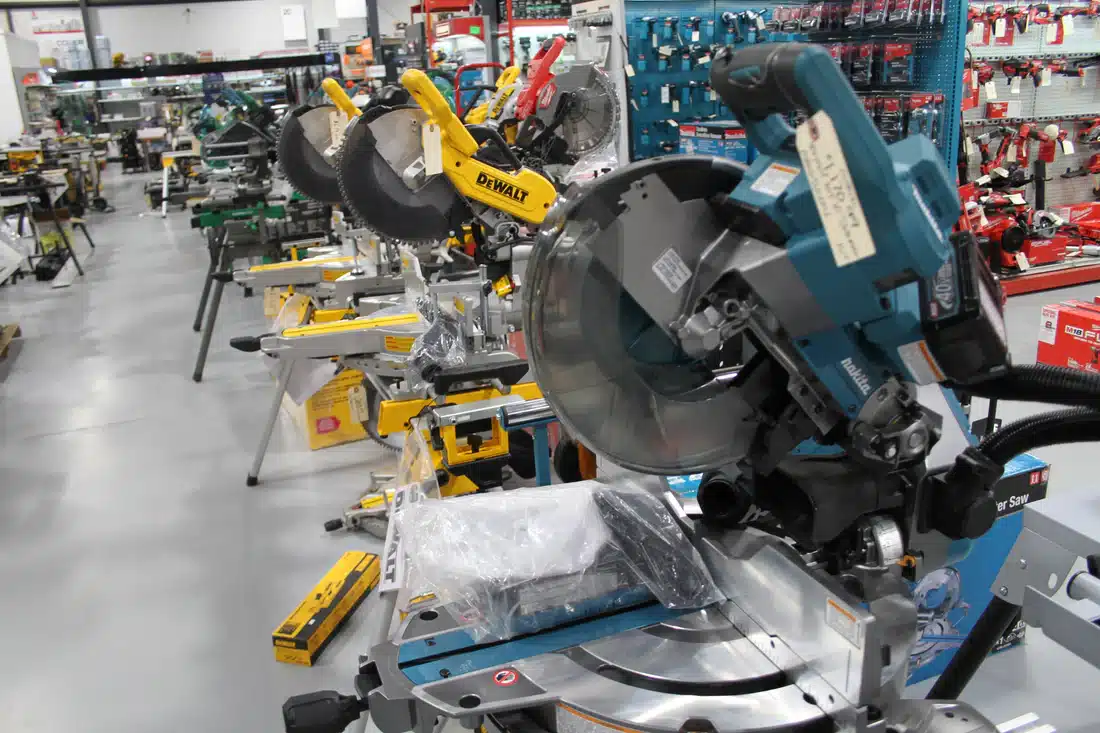
If you’re like me, you’ve probably spent more time than you’d like comparing specs, reading tool forums, and wandering the aisles at Home Depot, totally overwhelmed by options. Been there, done that! After years on jobsites and helping friends set up their garages, these are the miter saws I’d actually recommend for 2025—real-world tested and ranked for what matters most: accuracy, reliability, ease of use, and value for your money.
| Miter Saw Model | Type | Blade Size | Pros | Cons | Best For |
|---|---|---|---|---|---|
| Bosch GCM12SD→ | Sliding Compound | 12″ | Smoothest glide, super accurate, compact for its size | Bulky, higher price | Precision/Finish Work |
| DeWalt DWS780→ | Sliding Compound | 12″ | Powerful, trusted, XPS cutline, durable | Heavy, pricier | All-around/Contractors |
| Makita LS1019L→ | Sliding Compound | 10″ | Compact, dead-on accurate, easy adjustments | Setup can be tricky, price | Small Shops/DIY Pros |
| Festool Kapex KS 120→ | Sliding Compound | 10-1/4″ | Unmatched precision, compact, dust collection is stellar | Very expensive, unique blade size | Pros/Finish Carpentry |
| Metabo HPT C10FCGS→ | Single Bevel | 10″ | Lightweight, affordable, easy to move | Basic features | Budget/First Saw |
| Bosch PROFACTOR GCM18V-12GDCN→ | Cordless Sliding | 12″ | Cordless, jobsite tough, fast setup | Heavy for cordless | Mobile Pros/Remodelers |
| Ridgid R4222→ | Sliding Compound | 12″ | Heavy-duty, value, good features | Very bulky, loud | Value Seekers |
| Ryobi TSS103→ | Sliding Compound | 10″ | Great price, decent for light DIY | Not as precise, feels light | Casual/Homeowner Use |
Bosch GCM12SD – My Top Pick (Best Overall)

If you forced me to pick one miter saw for the next decade, this is it. My Bosch GCM12SD is just plain fun to use. The axial-glide arm is so smooth you won’t want to go back. It makes sliders feel rough, it saves space in my shop and on the jobsite, the controls are intuitive, and the accuracy is spot on. I’ve cut everything from thick oak baseboards to tiny window trim on this thing and barely had to recalibrate.

My only gripe? It’s a beast to move if you don’t have a dedicated bench. In that case, you’ll definitely want a stand with wheels to go with it. But if you want a saw that feels pro and lasts forever, this is the one.
BOSCH 12 Inch Corded Dual-Bevel Sliding Glide Miter Saw
-Patented axial glide for ultra-smooth cuts
-14″ crosscut & 6.5″ vertical capacity
-Front bevel controls for quick settings
-Squarelock fences stay perfectly aligned
-Easy-read bevel and miter scales
Also, check out the more compact 10″ blade version here.
DeWalt DWS780 – Most Trusted All-Rounder

There’s a reason you see this yellow saw everywhere, cuz DeWalt’s DWS780 is built for work. The XPS cutline system is a game changer, especially for fast setup or low-light garages. Power’s never an issue; I’ve ripped through 2x12s and thick hardwood with no bogging down. It’s a little heavy, so if you’re lugging it in and out of your truck every day, you’ll get a workout.
Still, if you want a saw that just works, day in and day out, this is as close to “set and forget” as it gets. Great for pros, but even a total newbie can figure it out in five minutes.
DeWalt DWS780
-15-amp motor powers through tough material
-XPS shadow cutline LED for accurate cuts (no alignment needed)
-12″ blade with 16″ crosscut capacity (at 90°)
-Stainless steel miter detent plate, 10 positive stops
-Dual bevel (0–49°) for left/right angle versatility
Makita LS1019L – My Runner Up Pick

Makita nailed it with the LS1019L. It’s a 10-inch sliding miter saw that somehow fits where most 12-inchers won’t. Perfect for tight garages or when you need to haul it to a buddy’s house for a quick project. The sliding action is buttery, and out of the box, cuts are spot on. But you can make tweaks if needed. The forward rail system saves space and the laser system is precise( at least for a while).
Setup can be a bit involved if you’ve never done it before, and it isn’t as inexpensive as some of the others on this list. But if you care about precision and space, this saw is a solid bet.
Oh, and the 12″ option (LS1219L) is the same saw but with a 12″ blade versus the 10″ blade.
Makita Dual-Bevel Sliding Compound Miter Saw with Laser
-Compact dual-rail sliding system for small workspaces
-10″ blade, up to 12″ crosscut at 90°
-Built-in laser for cut line indication
-Dual bevel: 0–48° left, 0–48° right
-Ergonomic front bevel lock
Metabo HPT C10FCGS – Best Budget Buy

If you’re just starting out or want a decent backup, the Metabo HPT C10FCGS is a great “first miter saw.” Lightweight, reliable, and usually under $150 (under $100 used on Amazon when posting this), it’ll handle trim, flooring, and basic framing with ease. Not loaded with features, but honestly, sometimes simple works best.
It’s not built for big crown or long runs, but for weekend projects and new DIYers? It’s hard to beat for the money.
Bosch PROFACTOR GCM18V-12GDCN – Best Cordless Miter Saw

This is my go-to cordless pick and it’s not even close. The Bosch PROFACTOR delivers true corded-level power, but you can haul it anywhere—garage, jobsite, backyard deck build, you name it. It runs on their beefy CORE18V batteries, and honestly, I’ve yet to feel like I was sacrificing power for portability. The sliding action is smooth, the dust collection works way better than most, and the cut capacity is huge for a cordless.
Downsides? It’s not a featherweight and definitely heavier than you’d expect for cordless. And it sits at a pro-level price point. But if you want full-size performance without dragging cords around, this is the saw.
Bosch 18V PROFACTOR 12 in. Cordless Miter Saw
-Cordless 12″ sliding miter saw on CORE18V batteries
-Comparable power to corded with BiTurbo Brushless motor
-5-1/2″ vertical and 14″ horizontal capacity
-Front bevel controls and detent override
-Upgraded dust extraction port
Also, check out the 10″ sliding miter saw version of the best cordless miter saw.
Ridgid R4222 – Heavy-Duty Value

The Ridgid R4222 is huge, heavy, and loud, but it’s pretty tough and loaded with pro features. Decent dust collection, solid fence, and cuts straight (at least for a while). If you want serious capacity (think 2x16s on a regular basis) and don’t want to drop $600+, it’s worth a look, but it’s not really a “standout pick” if you ask me.
I will certainly get the job done, and it is more affordable. Just make sure you have the space, a sturdy stand, and don’t need top performance if you consider this saw for pro use.
📌Disclaimer: I am not a fan of Ridgid Tools. It’s a taste thing. Many others have had great success with them, but I personally don’t favor their tools.
Ryobi TSS103 – Best for Occasional DIYers

Not everyone needs a pro saw! The Ryobi TSS103 is budget-friendly, easy to use, and perfect for basic trim, picture frames, or small furniture builds. It’s light enough to move around, and the cuts are good enough for most weekend warriors.
You will outgrow it if you get serious, but for light home use, you can’t really go wrong.
Ryobi 10 in. Sliding Compound Miter Saw
-Sliding 10″ blade for up to 12″ crosscuts
-LED Cutline Indicator for visibility
-Lightweight, easy for home users to move/store
-Miter range 47° left/47° right
-Simple, tool-free adjustments
Festool Kapex KS 120 REB – Elite Pick for Professional Finish Carpenters

If you’ve ever walked onto a luxury jobsite, you’ve probably seen the Festool Kapex and wondered if it’s really worth the eye-watering price tag.
Honestly? For most DIYers, it’s probably overkill—but man, is it a thing of beauty.
The Kapex is very precise, dead simple to adjust, and the dust collection blows everything else out of the water (seriously, you could almost cut trim in your living room with a dust collector).
The compact footprint is awesome if space is tight. Everything about it feels engineered for high-end finish carpentry—think flawless miters on fancy crown or custom cabinetry. But here’s the truth: you’re paying a lot for that Festool badge and German engineering. If your budget allows and you want the best, this is the holy grail.

Festool KAPEX KS 120 REB
-Unique rail forward design for compact footprint and precision
-10-1/4″ blade, up to 12″ crosscut at 90°
-Dual lasers for precise cut marking
-Industry-leading dust collection (up to 91%)
-Fine micro-adjustable bevel and miter
And that’s it for the best miter saws!
Quick Tip: If you’re stuck between a few options, make a list of your actual needs. Are you hauling this thing job-to-job? Space tight in your garage? Just want clean crown molding for a bedroom? Picking the best miter saw is all about matching the tool to your real-world projects.
How to Choose the Best Miter Saw for Your Needs
Shopping for the best miter saw can feel like falling down a rabbit hole—so many numbers, specs, and features that sometimes I forget what I actually needed in the first place! I’ve been there, staring at display racks or scrolling reviews at midnight, wondering if a sliding arm or laser guide is going to actually change my life (spoiler: sometimes yes, sometimes absolutely not).
Here’s what really matters, whether you’re a new DIYer or a seasoned wood geek:
1. Blade Size (10” vs 12”)
- 10-inch saws are lighter, usually cheaper, and can handle most home projects.
- 12-inch saws give you more cutting depth and power for big framing lumber or wide moldings.
- For most DIYers, 10” is plenty. If you want to build decks or cut big beams, go 12”.
2. Sliding vs. Non-Sliding
- Sliding miter saws let you cut wider boards—lifesaver for shelving, flooring, or thick trim.
- Non-sliding is lighter, simpler, and often more accurate for small work.
- If space is tight or you mostly cut narrow stock, don’t stress about getting a slider.
3. Compound and Dual-Bevel Features
- “Compound” just means it tilts for bevel cuts (think crown molding or picture frames).
- Dual-bevel saws tilt both ways, making complex angle cuts easier and safer.
- Single-bevel is fine for most folks, but dual-bevel saves you flipping long boards.
4. Corded vs. Cordless
- Corded = steady power all day, no charging.
- Cordless = ultimate portability, less power for marathon jobs.
- If your shop doesn’t have great outlets or you move a lot, cordless can be a game-changer.
5. Accuracy & Adjustability
- Look for solid fences, easy-to-read scales, and smooth sliding arms.
- Test the miter and bevel locks—if they feel flimsy, that’s a red flag.
- Out of the box, a good saw should cut true with minimal fiddling.
6. Dust Collection
- Seriously underrated! Cheap saws throw dust everywhere—better ones can hook to a shop vac and keep your lungs (and workshop) cleaner.
7. Brand Reputation & Warranty
- Brands like Bosch, DeWalt, and Makita aren’t just hype—they actually last.
- Warranty length and service centers matter. If you buy from a big-box store, keep that receipt.
8. Accessories & Stands
- A solid stand is a back-saver. Built-in lights or laser guides are nice, but not deal-breakers.
- Blades matter more than most folks think—invest in a quality one for smoother, cleaner cuts.
Quick Checklist for Buying Your First Miter Saw
- What size boards do I need to cut most often?
- Is portability or power more important for me?
- Do I care about fancy features, or just clean, accurate cuts?
- Will I use it mostly in one spot or need to move it around?
- Do I have space for a big saw, or is compact better?
Honestly, don’t get lost chasing the “ultimate” tool. The best miter saw for you is the one that makes your next project easier, safer, and (hopefully) a little more fun.
Build Smarter – For FREE!
Join the Tekton Crew and grab 3 FREE Workbench Build Plans with 3D models—plus exclusive DIY tips, tool reviews, and more!
Best Miter Saw Safety Tips & Common Mistakes
Look, I’ve made my share of dumb mistakes on a miter saw—cutting on the wrong side of the line, forgetting my safety glasses, you name it. Truth is, a few good habits will save your fingers and your project.
Quick Safety Musts:
- Always wear eye protection and keep your hands well clear of the blade.
- Double-check your cut line before you drop the saw.
- Secure your workpiece—loose boards have a mind of their own.
- Never rush the cut. Let the blade get up to speed, then ease it down.
- Unplug or remove the battery before changing the blade. (Ask me how I learned that one…)
Honestly, it’s easy to get comfortable and let your guard down, but every pro I know has a story about letting safety slip—don’t be that story.
Want a deep dive with my best safety tips, setup steps, and all the mistakes I’ve made? Check out my full guide to using a miter saw safely.
Pro Tips for Getting the Most from Your Miter Saw
Want cleaner cuts and fewer do-overs? Here are a few tricks I’ve picked up after years (and plenty of mistakes) with miter saws:
- Use a sharp, quality blade—it really does make all the difference.
- Mark your boards clearly and clamp them when you can. Less wiggle, more accuracy.
- Test your angles on scrap wood before cutting your final piece. Saves frustration every time.
- Don’t force the blade—let it do the work.
For a ton more tips, favorite accessories, and my step-by-step process, check out my full miter saw guide here.
Best Miter Saw: My Personal Recommendation

If you want my honest advice for your first miter saw? Get the Bosch GCM12SD if you can swing it. This is the saw I reach for every single time. The controls are intuitive, the cuts are always clean, and that smooth glide arm still puts a grin on my face after years of use. You’ll get pro-level results from day one, and you won’t outgrow it as your skills improve.
Now, if you’re not sold on Bosch or maybe just want something a little different, the DeWalt DWS780 is an awesome alternative. Super reliable, easy to set up, and there’s a reason every contractor I know trusts DeWalt on the jobsite. With tool prices the way they are lately, you can often score a DeWalt for a great deal if you shop around.
If you’re only going to use your miter saw occasionally or just want to dip your toes in before spending big, take a look at the Ryobi TSS103 or Ridgid R4222. They’ll handle weekend projects and home repairs just fine. But honestly, for not much more cash, you can usually snag a DeWalt on sale and have a saw you’ll never need to upgrade.
Bottom line? Buy the best miter saw you can afford; you’ll thank yourself every time you make a cut. If you’re investing in your future career, then definitely don’t skimp.
Conclusion: Ready to Make Your Next Project Your Best Yet?
Choosing the best miter saw isn’t just about specs—it’s about making your projects easier, safer, and way more fun. Whether you grab the Bosch (my personal favorite), the trusty DeWalt, or a solid budget pick, having the right saw on your bench is a game-changer.
If you’re just starting out, remember: everyone’s first cut was a little rough. Stick with it, and you’ll be knocking out perfect angles before you know it.
Want more hands-on tips, tool reviews, and real-world project guides straight from my workshop? Join my email list below for exclusive content you won’t find anywhere else. And don’t miss my other top posts—like how to use a miter saw, best cordless tool brand, and essential DIY skills every builder should know.
Now, get out there and make some sawdust!
FAQ: Best Miter Saw (2025 Edition)
What is the best miter saw for beginners?
If you’re just starting out, the Bosch GCM12SD is my top pick because it’s easy to use, super accurate, and built to last. For a more budget-friendly option, check out the DeWalt DWS780 or even the Ryobi TSS103 for light home projects.
Which miter saw brand is the most reliable?
Bosch, Makita, and DeWalt are tried and true saws. Festool also makes seriously pro-level saws, but for most, Bosch, Makita, or DeWalt are a safe bet.
Is a sliding miter saw better than a compound miter saw?
Sliding miter saws can cut wider boards, making them more versatile for bigger projects. Compound saws (non-sliding) are great for trim, framing, and smaller spaces.
Can I use a miter saw to cut metal?
You can, if you use the right blade and the material is thin enough. Always double-check your saw’s manual and wear safety gear. Most miter saws are designed for wood, so don’t push it.
How do I choose the right blade for my miter saw?
Match your blade to the job: more teeth for smooth trim work, fewer teeth for rough cuts. Most DIYers are fine with a quality 60-tooth blade for clean, all-purpose cuts.
What safety gear should I wear with a miter saw?
At a minimum, wear safety glasses. Hearing protection, a dust mask, and keeping loose clothing out of the way are smart moves too.
Are cordless miter saws as powerful as corded ones?
The best cordless models, like the Bosch PROFACTOR, are nearly as powerful as corded saws for most jobs. Just keep spare batteries handy for all-day work.
How do I keep my miter saw accurate?
Check calibration regularly, clean out dust, and change blades when they get dull. If your cuts start going wonky, check the fence and bevel settings.
What’s the difference between single and dual bevel miter saws?
Single bevel saws tilt one way; dual bevels tilt both. Dual bevels are easier for compound cuts and save you from flipping your board around.


